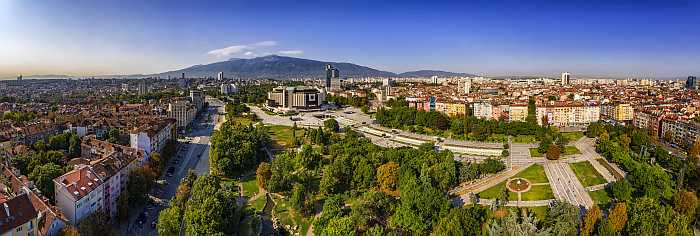
Sofia, Bulgaria (Photo: Envato)
When planning a summer getaway, cities like London, Paris, and Rome often top the list. But more travelers are starting to look beyond the classic Western European capitals. Eastern Europe, once overlooked, is quickly gaining attention. From fairytale cities to coastal gems, the region offers rich Jewish heritage, vibrant culture, and an expanding range of kosher-friendly amenities.
The shift isn’t just anecdotal. According to Kayak’s latest travel trends report (travel trends for 2026), travel demand continues to rise, with overall interest up 9% compared to last year and international airfare dropping, making long-haul trips more accessible. Even more telling, seven of the top ten trending destinations for 2026 are in Eastern Europe, with cities like Prague, Krakow, and Budapest leading the way.
What’s driving it? A mix of affordability, fewer crowds, and a growing preference for more authentic, experience-driven travel. For Jewish travelers, that shift is especially meaningful. Many of these destinations combine deep-rooted Jewish history with increasingly accessible infrastructure, including Chabad centers, kosher dining, and community resources. If you haven’t explored this part of Europe yet, this summer is a great time to start.
The shift isn’t just anecdotal. According to Kayak’s latest travel trends report (travel trends for 2026), travel demand continues to rise, with overall interest up 9% compared to last year and international airfare dropping, making long-haul trips more accessible. Even more telling, seven of the top ten trending destinations for 2026 are in Eastern Europe, with cities like Prague, Krakow, and Budapest leading the way.
What’s driving it? A mix of affordability, fewer crowds, and a growing preference for more authentic, experience-driven travel. For Jewish travelers, that shift is especially meaningful. Many of these destinations combine deep-rooted Jewish history with increasingly accessible infrastructure, including Chabad centers, kosher dining, and community resources. If you haven’t explored this part of Europe yet, this summer is a great time to start.
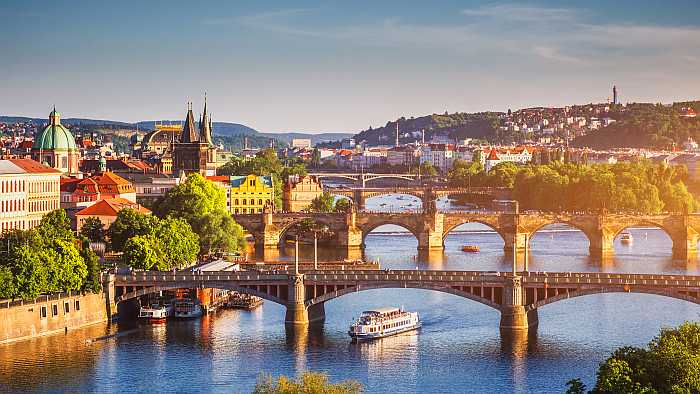
Prague, Czech Republic (Photo: Shutterstock)
Top Kosher-Friendly Destinations in Eastern Europe
Prague, Czech Republic
Prague feels like a city straight out of a fairytale, with winding cobblestone streets and dramatic architecture at every turn. The Jewish Quarter (Josefov) is home to the Old New Synagogue, one of the oldest active synagogues in the world, along with the Jewish Museum and historic cemetery. Today, Prague is one of the easiest places in Eastern Europe to travel kosher, with multiple kosher restaurants, bakeries, and a strong Chabad presence supporting visitors year-round.
Beyond its Jewish Quarter, Prague captivates with its Gothic and Baroque architecture. Visitors can explore the sprawling Prague Castle, stroll across the iconic Charles Bridge, and take in panoramic views from Petřín Hill.
For a full guide, visit our Kosher Travel Guide to Prague.
Beyond its Jewish Quarter, Prague captivates with its Gothic and Baroque architecture. Visitors can explore the sprawling Prague Castle, stroll across the iconic Charles Bridge, and take in panoramic views from Petřín Hill.
For a full guide, visit our Kosher Travel Guide to Prague.
Budapest, Hungary
Budapest’s Jewish Quarter is one of Europe’s most vibrant, centered around the grand Dohány Street Synagogue, the largest synagogue in Europe. The city is well set up for kosher travelers, with a range of meat and dairy restaurants, bakeries, and mikvahs, along with active Chabad and Orthodox communities that make it easy to plan a visit.
Beyond its Jewish life, Budapest offers a mix of historic and modern attractions. Relax in the city’s famous thermal baths like Széchenyi Spa, cruise along the Danube River, or explore landmarks like Buda Castle and the Hungarian Parliament Building.
Plan your visit with our Jewish and Kosher Guide to Budapest.
Beyond its Jewish life, Budapest offers a mix of historic and modern attractions. Relax in the city’s famous thermal baths like Széchenyi Spa, cruise along the Danube River, or explore landmarks like Buda Castle and the Hungarian Parliament Building.
Plan your visit with our Jewish and Kosher Guide to Budapest.
Split & Dubrovnik, Croatia
Croatia’s Dalmatian Coast has become a popular summer destination for kosher travelers looking to combine beach time with history. Both Split and Dubrovnik have small Jewish community centers, though no daily minyan. While kosher options are limited locally, Chabad of Zagreb provides kosher catering throughout the country with advance notice, making it possible to plan a fully kosher trip with some preparation.
In Split, the ancient Diocletian's Palace forms the heart of the city, surrounded by lively streets, markets, and cafes. Dubrovnik is known for its well-preserved city walls and striking Old Town, a UNESCO World Heritage site overlooking the Adriatic Sea. Together, they offer a mix of culture, scenery, and relaxed coastal travel.
Learn more in our Kosher Croatia Travel Guide.
In Split, the ancient Diocletian's Palace forms the heart of the city, surrounded by lively streets, markets, and cafes. Dubrovnik is known for its well-preserved city walls and striking Old Town, a UNESCO World Heritage site overlooking the Adriatic Sea. Together, they offer a mix of culture, scenery, and relaxed coastal travel.
Learn more in our Kosher Croatia Travel Guide.
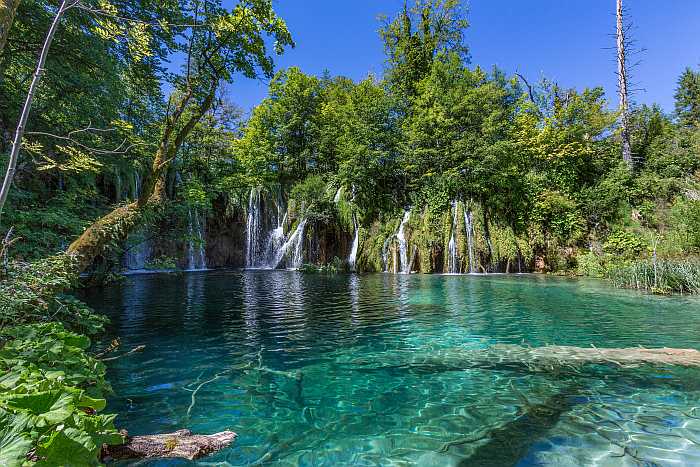
Plitvice Lakes National Park in Croatia (Photo: Envato)
Tbilisi & Batumi, Georgia
Georgia has become an increasingly popular destination for kosher travelers, offering a mix of dramatic landscapes, rich culture, and warm hospitality. In Tbilisi, visitors can find two historic synagogues, kosher restaurants, and kosher-friendly hotels. Chabad of Tbilisi plays a central role, providing meals, Shabbat services, and support for travelers. Batumi, along the Black Sea, has also grown as a relaxed coastal getaway, with kosher hotel options during the summer season.
Tbilisi charms visitors with its eclectic architecture, vibrant arts scene, and the scenic Narikala Fortress overlooking the city. Batumi offers a different pace, with a modern seaside promenade, beaches, and attractions like the Alphabet Tower. Together, they make Georgia an appealing mix of city, culture, and beach.
Explore both cities with our Kosher Travel Guide to Georgia.
Tbilisi charms visitors with its eclectic architecture, vibrant arts scene, and the scenic Narikala Fortress overlooking the city. Batumi offers a different pace, with a modern seaside promenade, beaches, and attractions like the Alphabet Tower. Together, they make Georgia an appealing mix of city, culture, and beach.
Explore both cities with our Kosher Travel Guide to Georgia.
Sofia, Bulgaria
Sofia offers a quieter, more affordable alternative to some of Europe’s busier capitals, making it an appealing option for travelers looking to explore something a bit different. The city’s Jewish history dates back centuries, highlighted by the impressive Moorish-style Sofia Synagogue, one of the largest in Europe. While the community today is small, it remains active, with kosher meals available through Chabad as well as at Hamsa, a kosher meat restaurant under local supervision.
Beyond its Jewish sites, Sofia blends ancient history with a laid-back, modern feel. Visitors can explore Roman ruins from the ancient city of Serdica, relax in spacious parks, and experience a growing cultural scene known for its street art, markets, and architecture. It’s not as developed as Prague or Budapest for kosher travel, but for those willing to plan ahead, it offers a unique and less crowded experience.
For a directory of kosher dining and Jewish community resources, check our Directory of Kosher and Jewish Life in Bulgaria.
Beyond its Jewish sites, Sofia blends ancient history with a laid-back, modern feel. Visitors can explore Roman ruins from the ancient city of Serdica, relax in spacious parks, and experience a growing cultural scene known for its street art, markets, and architecture. It’s not as developed as Prague or Budapest for kosher travel, but for those willing to plan ahead, it offers a unique and less crowded experience.
For a directory of kosher dining and Jewish community resources, check our Directory of Kosher and Jewish Life in Bulgaria.
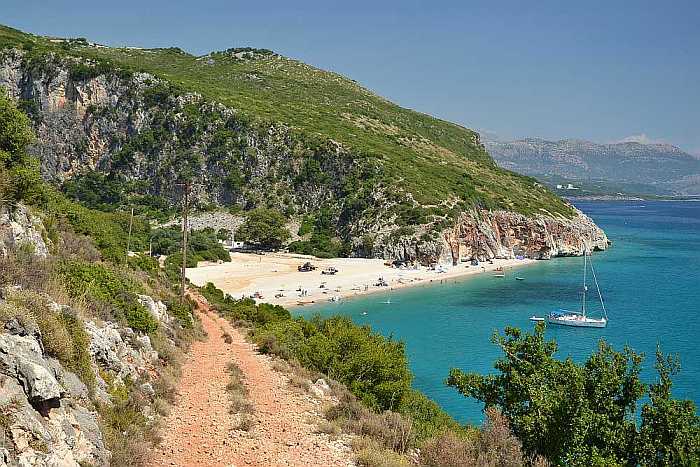
Albanian Riviera (Photo by Pudelek, CC BY-SA 3.0, via Wikimedia Commons)
Tirana, Albania
Albania is an emerging destination for kosher travel, attracting visitors looking for something less crowded and off the typical European route. In Tirana, Chabad has established a welcoming presence, including a WhatsApp group that helps connect and assist travelers. Kosher options are still developing, but the infrastructure continues to grow, making it an increasingly viable destination with a bit of planning.
Tirana itself is known for its colorful buildings and eclectic architecture, reflecting the country’s dynamic history. Visitors can explore Skanderbeg Square, the National History Museum, and the Bunk’Art Cold War museum, or take a cable car up Mount Dajti for panoramic views. The nearby Albanian Riviera adds another dimension, with some of the most beautiful and less crowded beaches in the region.
For kosher dining and Jewish community information, visit our Directory of Kosher and Jewish Life in Albania.
Tirana itself is known for its colorful buildings and eclectic architecture, reflecting the country’s dynamic history. Visitors can explore Skanderbeg Square, the National History Museum, and the Bunk’Art Cold War museum, or take a cable car up Mount Dajti for panoramic views. The nearby Albanian Riviera adds another dimension, with some of the most beautiful and less crowded beaches in the region.
For kosher dining and Jewish community information, visit our Directory of Kosher and Jewish Life in Albania.
Bucharest, Romania
Romania’s capital surprises many visitors with its rich Jewish history and distinctive architecture. The Coral Temple and Jewish Museum reflect Bucharest’s once-thriving Jewish community, while today, Chabad of Bucharest provides kosher meals and support for travelers. A small but growing number of kosher dining options can also be found, making it possible to plan a comfortable visit.
Bucharest itself is known for its wide boulevards and Belle Époque architecture, with highlights including the massive Palace of the Parliament and the lively Lipscani district. Beyond the city, Romania’s mountain regions, particularly the Carpathians, have become increasingly popular for kosher summer getaways. Programs like Avimor’s kosher summer experience offer a way to combine nature, outdoor activities, and a fully kosher setup in a scenic setting.
For kosher dining and Jewish community information, visit our Directory of Kosher and Jewish Life in Bucharest.
Bucharest itself is known for its wide boulevards and Belle Époque architecture, with highlights including the massive Palace of the Parliament and the lively Lipscani district. Beyond the city, Romania’s mountain regions, particularly the Carpathians, have become increasingly popular for kosher summer getaways. Programs like Avimor’s kosher summer experience offer a way to combine nature, outdoor activities, and a fully kosher setup in a scenic setting.
For kosher dining and Jewish community information, visit our Directory of Kosher and Jewish Life in Bucharest.
Montenegro
Montenegro’s coastline offers crystal-clear waters and dramatic scenery, making it one of the most visually striking destinations in the region. The Jewish community is small, but Chabad of Montenegro, based in Budva and Podgorica, provides kosher meals and Shabbat services to travelers. While kosher options remain limited overall, they have started to expand, including kosher dining available at Dukley Hotel & Resort, allowing for a more comfortable stay with advance planning.
Montenegro's Bay of Kotor is known for its fjord-like beauty and medieval towns like Kotor and Perast. Adventure seekers can explore Durmitor National Park, home to the Tara River Canyon, one of Europe’s deepest gorges. The mix of coastline, mountains, and a growing kosher infrastructure makes Montenegro a rewarding and increasingly popular choice for summer travel.
Visit our Kosher Travel Tips for Montenegro for details.
Montenegro's Bay of Kotor is known for its fjord-like beauty and medieval towns like Kotor and Perast. Adventure seekers can explore Durmitor National Park, home to the Tara River Canyon, one of Europe’s deepest gorges. The mix of coastline, mountains, and a growing kosher infrastructure makes Montenegro a rewarding and increasingly popular choice for summer travel.
Visit our Kosher Travel Tips for Montenegro for details.
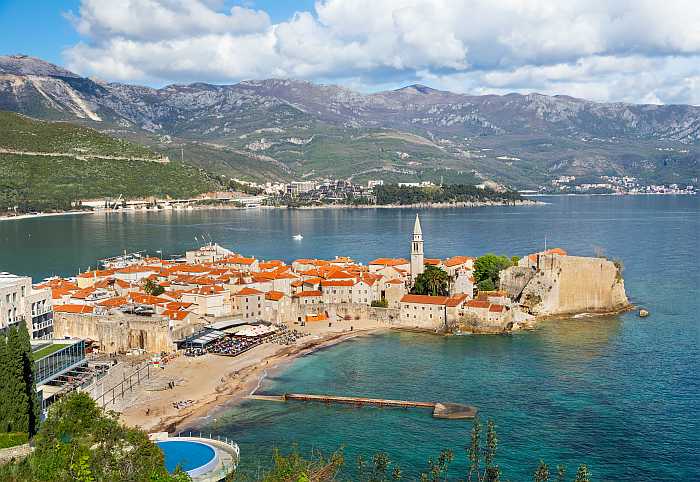
Budva, Montenegro (Photo: Envato)
Conclusion
From the historic streets of Prague and Budapest to the coastal landscapes of Croatia, Albania, and Montenegro, Eastern Europe has become an increasingly appealing option for kosher travelers. What once required significant planning is now far more accessible, with growing Chabad networks, more kosher dining options, and a wider range of destinations to choose from.
Each location offers a different kind of experience, whether it’s Jewish history, city culture, or a relaxed summer by the sea. And with relatively short flights and easy connections between countries, it’s simple to combine multiple stops into one trip. For those looking to explore somewhere a little different this summer, Eastern Europe is well worth considering.
Each location offers a different kind of experience, whether it’s Jewish history, city culture, or a relaxed summer by the sea. And with relatively short flights and easy connections between countries, it’s simple to combine multiple stops into one trip. For those looking to explore somewhere a little different this summer, Eastern Europe is well worth considering.