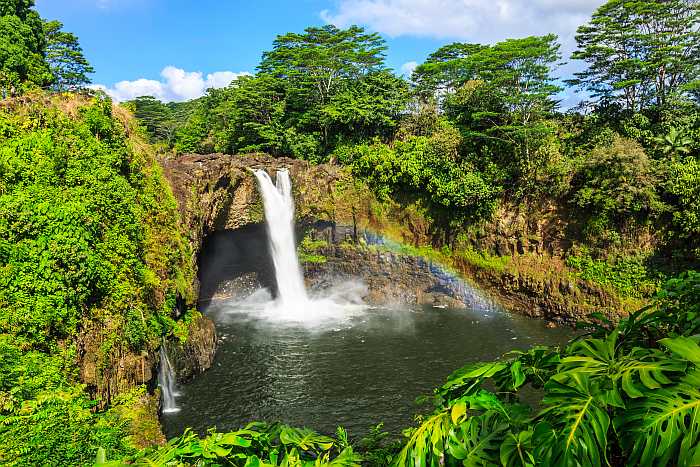
Rainbow Falls in the Wailuku River State Park on the Big Island (Photo: Shutterstock)
Hawaii is famous for beautiful beaches, volcanic landscapes, tropical rainforests and outdoor adventures. Each island offers a different experience, from the energy of Oahu and the resort beaches of Maui to the volcanoes of Hawaii Island and the dramatic scenery of Kauai. For kosher travelers, choosing the right island and planning food and Shabbat arrangements in advance can make all the difference.
Hawaii is a year-round destination, with average daytime temperatures generally ranging from 75–85°F (24–29°C). November through March tends to bring more rain, although conditions vary considerably between islands and even between different sides of the same island. These months are also popular for winter vacations, especially for travelers looking to escape colder weather.
The kosher scene in Hawaii has changed significantly since my honeymoon in the late 1990s. At the time, there was only one Chabad on Oahu, and they happened to be away during our visit. We ordered Shabbat food from a mainland caterer to be delivered to our hotel in Kauai, only to discover that overnight delivery applied to Oahu and not the neighboring islands. The food arrived after we had already left Kauai, leaving us to rely on the limited kosher products we could find at a supermarket.
Planning a kosher vacation in Hawaii is easier today. There are Chabad centers on Oahu, Maui, Kauai and Hawaii Island, although the availability of minyanim, Shabbat meals and kosher food differs between islands. Oahu has the most established kosher infrastructure, including a seasonal kosher restaurant, hotel delivery and food that can be shipped to the neighboring islands. On Maui, Kauai and Hawaii Island, travelers need to make arrangements well in advance. Our kosher and Jewish guide to Hawaii has listings and contact information to help you plan.
This guide covers the four main islands with Chabad centers and explains what each one offers, where to find Jewish services and what kosher travelers should know before booking.
Jewish Life in Hawaii
Hawaii’s Jewish community is small, but its history dates back to the 19th century. One notable early resident was Elias Abraham Rosenberg, who arrived in Honolulu in the late 1800s and developed a close relationship with King David Kalākaua.
Jewish life expanded during and after World War II as Jewish military personnel were stationed in Hawaii. The Aloha Jewish Chapel at Pearl Harbor opened in 1975 and continues to serve Jewish members of the military, their families and the wider community.
Today, Jewish communities can be found on several islands. Oahu has the largest selection of synagogues and Jewish services, including Chabad of Hawaii and Temple Emanu-El in Honolulu. Chabad centers on Maui, Kauai and Hawaii Island support local residents and visitors with holiday programs, Shabbat meals and services that vary by location and season.
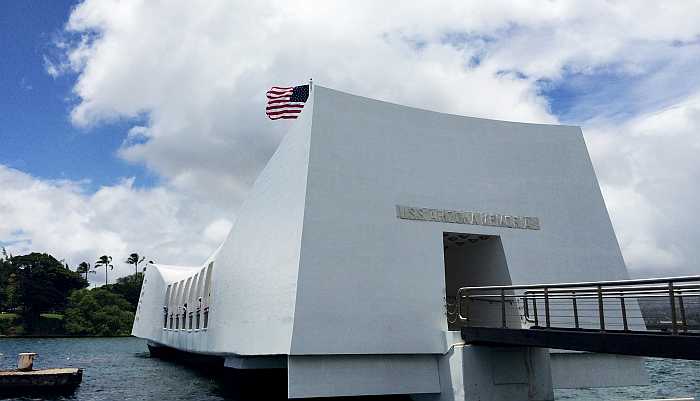
The USS Arizona Memorial at Pearl Harbor in Honolulu (Photo: Envato)
Oahu: The Heart of Jewish Life in Hawaii
Oahu combines beaches and outdoor activities with the museums, historic sites and family attractions of Honolulu. It is also the easiest Hawaiian island for kosher travelers, with the state’s most established Jewish community, regular minyanim, Shabbat meals, a mikvah and several ways to arrange kosher food.
Kosher Food and Jewish Services on Oahu
Chabad of Hawaii is located near Waikiki and hosts Friday-night dinner and Shabbat lunch throughout the year with advance reservations. Chabad also has regular weekday and Shabbat services and a mikvah.
Aloha Lani, located at Chabad, is Oahu’s only Glatt kosher restaurant. It operates seasonally, generally during busy travel periods, so check its current schedule before visiting. Oahu Kosher offers prepared weekday meals and delivers to hotels and vacation rentals across the island. Basic kosher products can also be found at supermarkets including Safeway, Walmart and Costco, although the selection varies.
Many Waikiki hotels are within walking distance of Chabad. Travelers staying for Shabbat should speak to the hotel in advance about electronic room keys, locked stairwells and motion-activated doors or lights.
What to See and Do on Oahu
Waikiki is the center of Oahu’s visitor scene, with a long stretch of beach, hotels, shops and family attractions. The calm waves along parts of Waikiki Beach make it a popular place for swimming and beginner surfing. The Honolulu Zoo and Waikiki Aquarium are also nearby.
Downtown Honolulu is home to ʻIolani Palace, the former residence of Hawaii’s monarchy and the only royal palace in the United States. Nearby, the King Kamehameha I Statue honors the ruler who united the Hawaiian Islands.
Pearl Harbor is one of Oahu’s most important historic sites. The complex includes the USS Arizona Memorial and several museums and exhibits connected to the attack on Pearl Harbor and World War II. Entry to the USS Arizona Memorial program is free, but advance reservations are strongly recommended.
Diamond Head offers one of the island’s best-known hikes, with panoramic views over Waikiki and the Pacific Ocean. Non-Hawaii residents must reserve entry in advance, and parking reservations are required for those arriving by car.
Oahu’s North Shore has a very different atmosphere from Honolulu. During winter, powerful waves at Banzai Pipeline and Sunset Beach attract professional surfers and large crowds. Conditions are generally calmer during summer, making it easier to enjoy the beaches and coastal scenery.
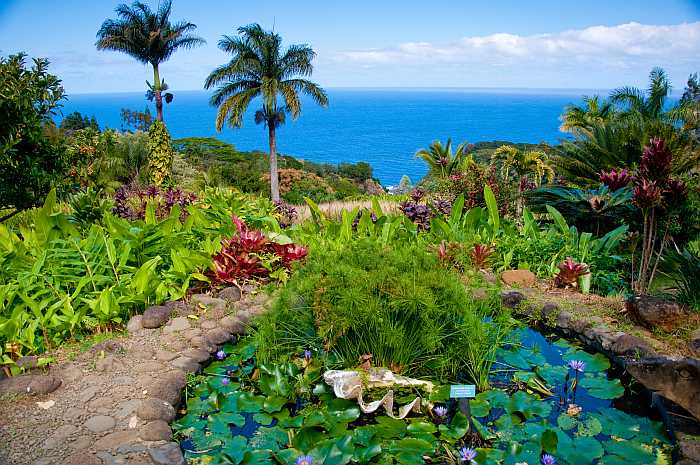
Maui (Photo: Shutterstock)
Maui: Beaches, Volcanoes and Scenic Drives
Maui is known for its resort beaches, volcanic landscapes, waterfalls and scenic coastal drives. It is especially popular with couples and honeymooners, but the island also has plenty of activities for families and outdoor travelers. Kosher food is more limited than on Oahu, so advance planning is essential.
Kosher Food and Jewish Services on Maui
Maui has several kosher food options, but travelers should make arrangements before arriving. Kosher on Maui offers kosher catering and prepared meals, while Maui Kosher Farm provides additional kosher food and dining options. Availability, ordering requirements and delivery areas can vary, so it is best to contact each provider directly in advance.
Maui also has an active Chabad house serving the local Jewish community and visitors. Minyanim, Shabbat meals and other visitor services may depend on the date and number of participants, so contact Chabad directly rather than assuming that regular services will be available.
See our complete guide to kosher food and Jewish life on Maui for current listings, contact information and updates.
What to See and Do on Maui
The Road to Hana is one of Maui’s most famous experiences. The winding route passes rainforests, waterfalls, coastal lookouts and small communities before reaching Hana in East Maui. The drive takes much longer than its mileage suggests, so allow a full day and avoid trying to fit in every stop. Non-Hawaii residents must reserve entry and parking in advance for Waiʻānapanapa State Park, known for its black-sand beach.
Haleakalā National Park is home to Maui’s highest peak, rising more than 10,000 feet above sea level. Visitors come for the volcanic scenery, hiking trails and wide views across the island. Sunrise entry requires an advance reservation, and temperatures at the summit can be surprisingly cold even when the beaches are warm.
The historic town of Lahaina was devastated by the August 2023 wildfire. Recovery and rebuilding continue, and access to some areas remains limited. Visitors should follow current local guidance, respect closed and residential recovery areas, and support West Maui businesses that have reopened.
Wailea is one of Maui’s main resort areas, with beaches, walking paths and luxury hotels. Wailea Beach is popular for swimming and snorkeling when conditions are calm. Humpback whales can often be seen in the waters around Maui during the winter migration season, generally from December through April.
ʻĪao Valley State Monument is known for its steep green mountains and the distinctive ʻĪao Needle. The park also has paved walking paths and exhibits explaining the valley’s natural and cultural history. Advance reservations are required for non-Hawaii residents.
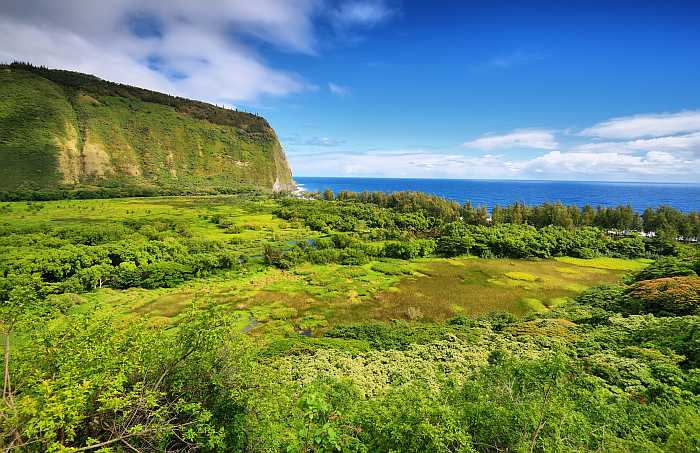
Waipio Valley on the Big Island ( Photo: Envato)
Hawaii Island: Volcanoes, Stargazing and Outdoor Adventure
Hawaii Island, commonly called the Big Island, is larger than all the other Hawaiian Islands combined. Its varied landscapes include volcanic craters, rainforests, waterfalls and beaches with white, black and green sand. The island is divided between the drier Kona coast in the west and the wetter Hilo side in the east, with a driving time of around two hours between them.
Kosher Food and Jewish Services on Hawaii Island
There are no kosher restaurants on Hawaii Island, so travelers should bring food or make arrangements in advance. The island has two Chabad centers, one serving Kona and West Hawaii and another serving Hilo and the eastern side of the island.
Chabad Jewish Center of the Big Island is located in Kailua-Kona and offers the most established visitor services. Guests can reserve Shabbat meals in advance, and Shabbat and Yom Tov minyanim are often available. There is no guaranteed daily minyan, so contact Chabad before traveling for current information about kosher food, services and meals.
Chabad of Hilo and East Hawaii serves the Jewish community on the eastern side of the island. It occasionally hosts Friday-night dinners and other events, but meals and minyanim are not available every week. Visitors should contact Chabad directly before making plans.
The island’s size is important when choosing where to stay. Most resorts are along the Kona and Kohala coasts, while Hawaii Volcanoes National Park, Hilo and many waterfalls are on the eastern side. The drive between Kona and Hilo takes around two hours, so travelers planning to spend Shabbat with either Chabad should choose accommodations nearby and confirm arrangements before booking.
What to See and Do on Hawaii Island
Hawaii Volcanoes National Park, a UNESCO World Heritage Site, is home to Kīlauea and Mauna Loa, two of the world’s best-known active volcanoes. Visitors can explore volcanic craters, lava fields, scenic drives and hiking trails. Eruption activity and park closures can change quickly, so check current conditions before visiting.
Mauna Kea is Hawaii’s highest peak and one of the world’s leading locations for astronomical observation. Visitors can enjoy stargazing from the lower visitor area, but reaching the summit requires a suitable four-wheel-drive vehicle and careful preparation for the high altitude and cold temperatures. Access rules and weather conditions should be checked in advance.
ʻAkaka Falls State Park, north of Hilo, has a short walking trail through tropical vegetation leading to a view of the 442-foot waterfall. Non-Hawaii residents must pay entrance and parking fees.
Waipiʻo Valley is known for its steep cliffs, waterfalls and importance in Native Hawaiian history. Access to Waipiʻo Valley Road is restricted, so visitors should check current county rules before planning a trip. Views of the valley are available from the public lookout.
Hāpuna Beach is one of the island’s best-known white-sand beaches. It is popular for swimming, snorkeling and bodyboarding when the water is calm, although conditions can become rough during the winter months.
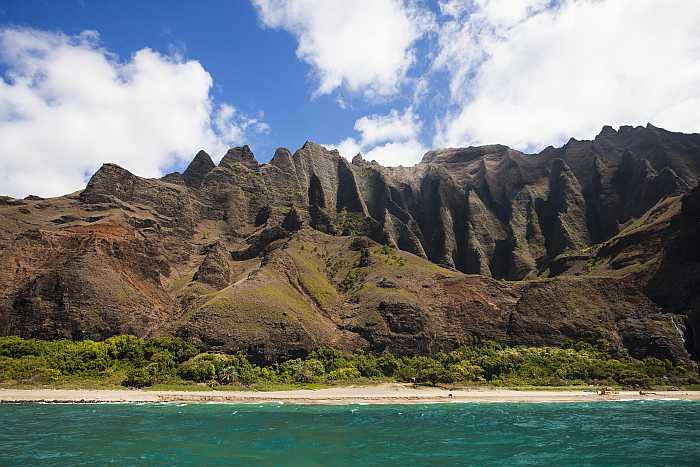
Na Pali Coast on Kauai (Photo: Envato)
Kauai: The Garden Isle
Kauai is the oldest and northernmost of Hawaii’s main islands. Known as the “Garden Isle,” it has a quieter atmosphere and some of the state’s most dramatic natural scenery, including rainforests, waterfalls, deep canyons and rugged sea cliffs. It is a wonderful choice for nature lovers, but kosher food and Jewish services are more limited than on the other islands.
Kosher Food and Jewish Services on Kauai
There is no kosher restaurant on Kauai, so travelers should bring food or arrange to have kosher meals shipped from Oahu. Booking a hotel room or vacation rental with a kitchen can make managing meals much easier.
The Kauai Jewish Center is located in Wailua on the island’s East Shore. Friday-night dinners are offered on selected weeks, but there is no regular daily minyan and a Shabbat minyan is not guaranteed every week. Contact the Jewish Center before planning your trip to confirm meals, services and current visitor arrangements.
Travelers hoping to attend services or a Friday-night dinner should choose accommodations within walking distance and confirm the route with the Jewish Center before booking.
What to See and Do on Kauai
The Nāpali Coast is one of Kauai’s most impressive sights, with steep sea cliffs, narrow valleys and waterfalls along the island’s northwest coast. It can be explored by boat, helicopter or hiking trail. The Kalalau Trail follows the coastline from Hāʻena State Park, but advance reservations and permits are required for access, parking and longer hikes.
Waimea Canyon stretches for approximately 14 miles across western Kauai. Several roadside lookouts offer views of its deep valleys, colorful cliffs and waterfalls. The drive can be combined with Kōkeʻe State Park, which has additional viewpoints and hiking trails.
Hanalei Bay is a wide, crescent-shaped bay surrounded by green mountains on Kauai’s North Shore. Swimming and paddleboarding are popular when conditions are calm, but winter surf can be powerful. Nearby Hanalei has small shops, galleries and restaurants, although kosher dining is not available.
The Wailua River can be explored by kayak, paddleboard or boat tour. Popular excursions include Fern Grotto and the trail to Uluwehi Falls, commonly called Secret Falls. Conditions can be muddy and river levels change after heavy rain, so check locally before setting out.
Kauai is best suited to travelers who are comfortable planning kosher food in advance. With the right arrangements, it offers a peaceful vacation filled with hiking, beaches, waterfalls and some of Hawaii’s most memorable scenery.
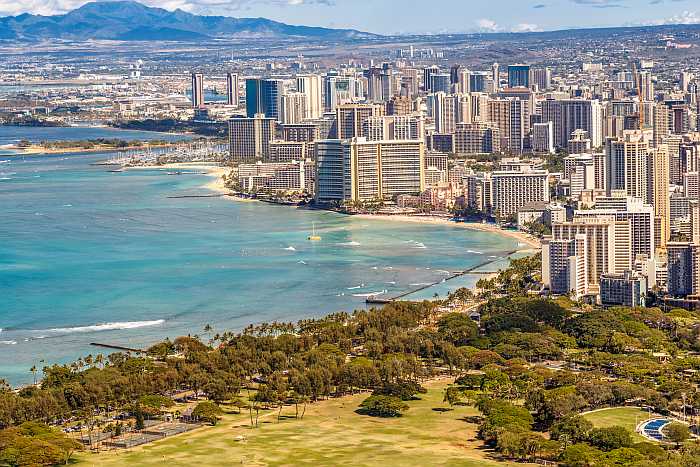
Waikiki Beach in Honolulu (Photo: Envato)
Planning Your Kosher Vacation in Hawaii
Hawaii offers an incredible mix of beaches, rainforests, volcanoes, waterfalls and outdoor adventures. Oahu has the most established kosher infrastructure, while Maui, Kauai and Hawaii Island require more planning. Kosher food, Shabbat meals and minyanim vary by island and are not always available every week.
Contact local Chabad centers and kosher food providers before booking accommodations, especially if your trip includes Shabbat. Choosing a hotel or vacation rental in the right location and arranging meals in advance will make the trip much easier.
Explore our guide to kosher food and Jewish life in Hawaii for current listings and contact information. With some advance preparation, you can enjoy everything that makes Hawaii special while keeping kosher throughout your trip.